

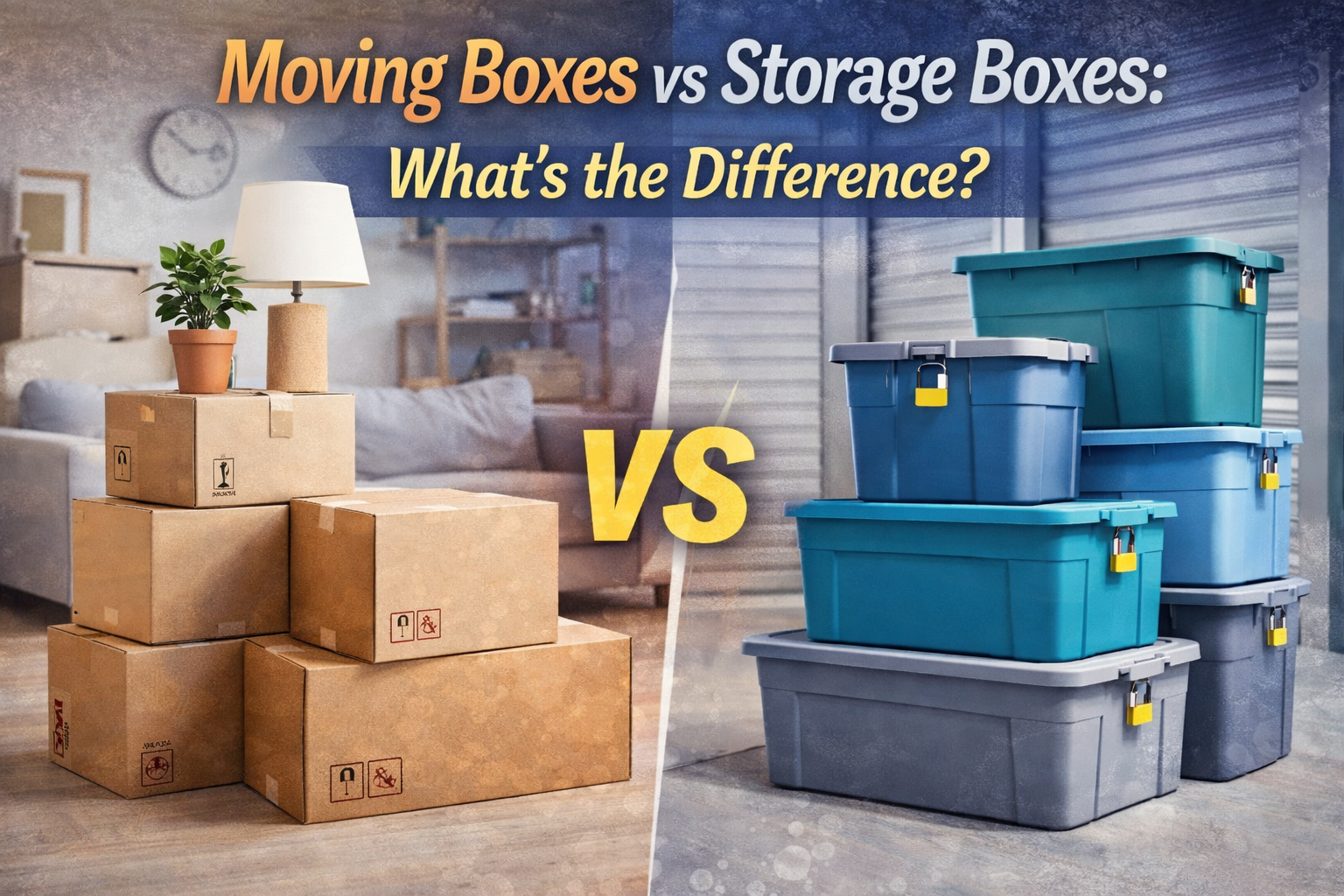
At first glance, a box is a box. But when it comes to packing, transporting or storing items, using the wrong type of box can lead to damaged goods, wasted money and unnecessary frustration. One of the most common points of confusion is the difference between moving boxes and storage boxes.
While they may look similar, these boxes are designed for very different purposes. Also, understanding how they differ helps you choose the right option for your needs. So, whether you are relocating, storing inventory, or organising long term storage.
Suppliers like Premium Packaging work with customers every day to ensure the right box is used for the right job. Here is a clear breakdown of the differences between moving boxes and storage boxes, and why it matters.
What Are Moving Boxes?
Moving boxes are designed for short term use and transport. Their primary role is to protect items while they are being packed, loaded, transported and unpacked.
They are commonly used for:
- House and office moves
- Short distance transport
- Temporary packing
- Courier and freight movement
The focus of moving boxes is strength during handling rather than long term durability.
Key Features of Moving Boxes
Designed for Handling and Transport
Moving boxes are built to withstand lifting, stacking and vehicle movement. They are often sized to make carrying easier and to reduce the risk of overloading.
Lightweight but Strong
Most moving boxes use single or double wall cardboard. This provides enough strength to protect contents without adding unnecessary weight, which is especially important during moves.
Standardised Sizes
Moving boxes are often produced in standard sizes to make stacking in trucks or vans more efficient. This also helps with faster packing and unpacking.
Cost Effective for Short Term Use
Because they are designed for temporary use, moving boxes are usually more affordable than heavy duty storage boxes.
Premium Packaging supplies a wide range of moving boxes that balance strength, affordability and ease of use for relocation and transport.
What Are Storage Boxes?
Storage boxes are designed for longer term protection. Their role is not just to hold items, but to keep them safe over time, often in environments where conditions may change.
They are commonly used for:
- Long term household storage
- Warehouse and archive storage
- Business inventory storage
- Seasonal item storage
Storage boxes are built with durability and stability as the priority.
Key Features of Storage Boxes
Built for Long Term Durability
Storage boxes are often made from thicker, double or triple wall cardboard. This helps them maintain shape and strength over extended periods.
Better Stack Strength
Items in storage are often stacked for months or years. Storage boxes are designed to handle sustained weight without collapsing.
Improved Protection
Storage boxes are more resistant to compression, moisture exposure and general wear compared to moving boxes.
Designed for Repeated Access
Many storage boxes are designed to be opened and closed multiple times without losing structural integrity.
Premium Packaging Blogs offers storage box options suited to both small scale and commercial storage needs.
The Core Differences Explained Simply
Purpose
Moving boxes are for transport. Storage boxes are for long term holding.
Strength Over Time
Moving boxes handle short bursts of movement and stacking. Storage boxes maintain strength under constant load.
Cardboard Thickness
Moving boxes are typically lighter. Storage boxes use thicker materials for durability.
Cost
Moving boxes are generally cheaper. Storage boxes cost more due to higher material quality.
Lifespan
Moving boxes are often used once or twice. Storage boxes are designed to last much longer.
Why Using the Wrong Box Causes Problems
Using moving boxes for storage can lead to:
- Boxes collapsing under long term weight
- Damage to stored items
- Difficulty stacking safely
- Increased risk of moisture or dust exposure
Using storage boxes for moving can lead to:
- Higher costs than necessary
- Heavier loads that are harder to carry
- Inefficient packing and transport
Choosing the right box from the start avoids these issues.
When Moving Boxes Are the Better Choice
Moving boxes are ideal when:
- Items will be unpacked within weeks
- Boxes will be handled frequently
- Weight needs to be minimised
- Cost efficiency is important
So, They are particularly suited to residential moves. Also, office relocations and short term logistics.
When Storage Boxes Are the Better Choice
Storage boxes are the better option when:
- Items will be stored for months or years
- Boxes will be stacked long term
- Contents are valuable or fragile
- Access will be occasional but repeated
Businesses storing records, stock or seasonal goods benefit significantly from proper storage boxes.
Hybrid Needs: When You Might Need Both
Many people and businesses require both moving and storage boxes.
For example:
- Moving items into storage before unpacking later
- Transporting stock before warehousing
- Relocating offices with archived records
In these cases, Premium Packaging often recommends using moving boxes for transport and transferring items into storage boxes for long term holding.
Size and Weight Considerations
Moving boxes are often designed to discourage overloading, making them easier to carry safely.
So, Storage boxes are designed to maximise space efficiency. Also, sometimes encouraging heavier loads since they are not intended to be moved frequently.
Matching box size to purpose improves safety and efficiency.
Labelling and Organisation
Storage boxes often benefit from:
- Clear labelling panels
- Consistent sizing for stacking
- Inventory tracking systems
Moving boxes focus more on speed and convenience rather than long term organisation.
Premium Packaging supplies boxes compatible with both manual and barcode based inventory systems.
Environmental Considerations
Both moving and storage boxes can be made from recyclable materials. However, storage boxes often have a longer lifecycle, which can reduce overall waste.
Premium Packaging focuses on supplying boxes made from responsibly sourced cardboard, helping customers meet sustainability goals without sacrificing performance.
Business Use Cases
Businesses frequently use:
- Moving boxes for inbound and outbound logistics
- Storage boxes for warehousing and archives
Understanding this distinction helps businesses reduce damage, improve efficiency and lower long term costs.
Why Choosing the Right Supplier Matters
Not all boxes labelled as moving or storage boxes meet the same standards. A reliable supplier ensures:
- Correct box strength ratings
- Consistent sizing
- Reliable stock availability
- Advice based on real use cases
Premium Packaging works with customers to recommend the right box type based on how items will actually be used, not just what is cheapest upfront.
Why Premium Packaging Is Trusted
Customers choose Premium Packaging because they offer:
- High quality moving and storage boxes
- Clear guidance on box selection
- Wholesale and bulk supply options
- Consistent quality and sizing
- Solutions for residential and commercial needs
Their expertise helps prevent costly mistakes caused by using the wrong packaging.
Final Thoughts
Moving boxes and storage boxes may look similar. Also, but they are designed for very different jobs. Moving boxes prioritise ease of handling and transport. So, while storage boxes focus on long term durability and protection.
Choosing the right box protects your belongings, improves efficiency and reduces unnecessary costs. Also, Whether you are moving house. So, relocating a business or managing long term storage, understanding this difference is essential.
With guidance from Premium Packaging, customers can select the right packaging solution with confidence, ensuring their items are protected both in transit and over time.