
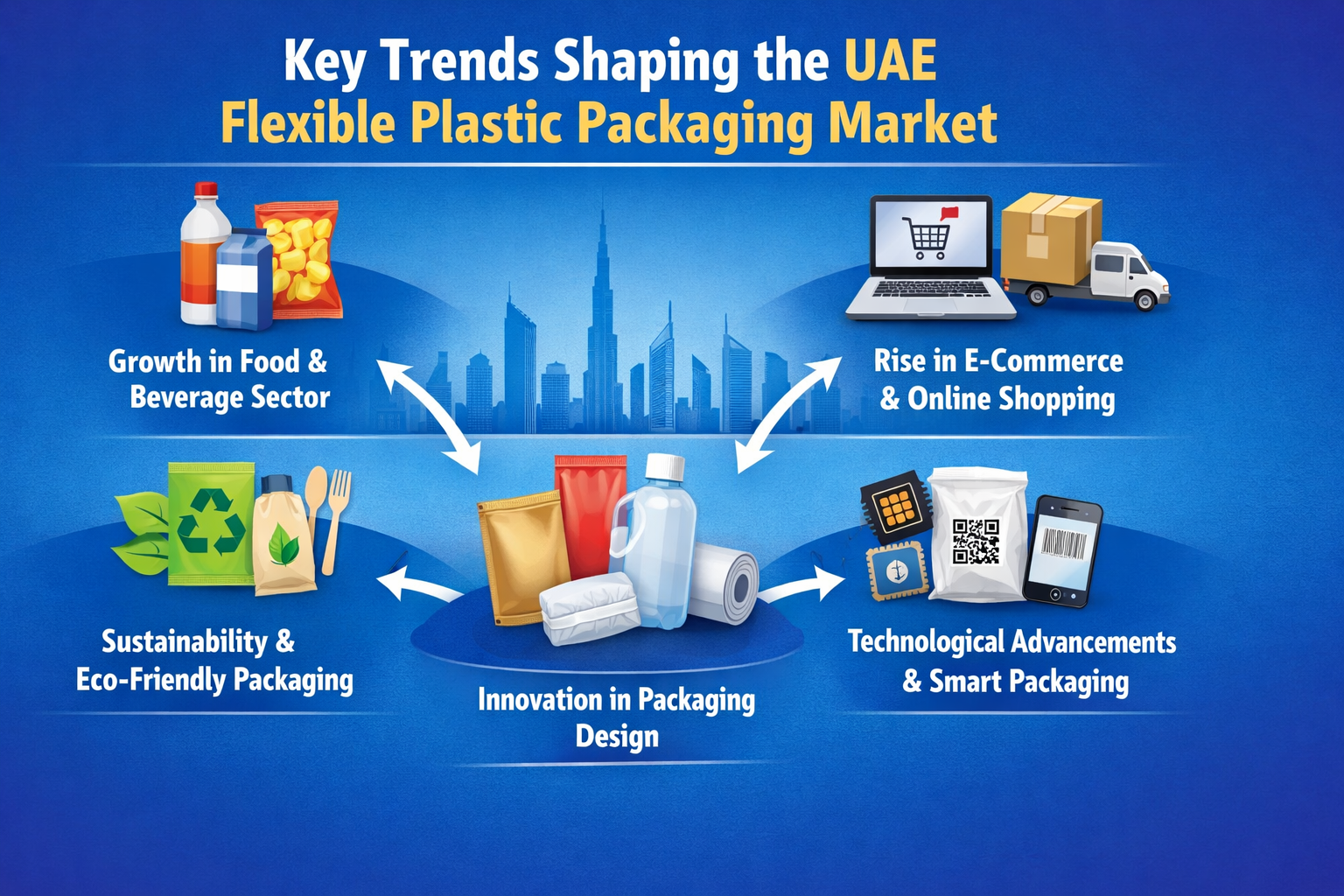
The UAE flexible plastic packaging market is evolving rapidly as sustainability priorities, end-user demand, and regulatory frameworks reshape how packaging is designed, sourced, and used. Positioned as a regional manufacturing and re-export hub, the United Arab Emirates plays a critical role in supplying flexible packaging solutions to food, beverage, pharmaceutical, and consumer goods industries across the GCC.
This guest article explores the most influential trends driving the UAE flexible plastic packaging industry, offering data-backed insights and strategic context for manufacturers, suppliers, and investors.
Industry Context: Why Flexible Plastic Packaging Dominates
Flexible plastic packaging remains a preferred choice in the UAE due to its cost efficiency, lightweight structure, and superior barrier properties. High urbanization rates, a strong modern retail presence, and demand for packaged and convenience foods continue to support consistent consumption.
At the same time, procurement teams and policymakers are applying pressure for environmentally responsible packaging, forcing material innovation without compromising performance.
Sustainability Is Reshaping Material Choices
Sustainability has moved from optional to essential in the UAE packaging ecosystem.
Key developments include:
- Government initiatives targeting waste reduction and recyclability
- Increased demand for mono-material and recyclable flexible films
- Gradual reduction in complex, non-recyclable laminates
Rather than eliminating plastics entirely, manufacturers are redesigning structures to improve recyclability while retaining shelf-life protection—particularly important in high-temperature environments like the UAE.
Food & Beverage Sector Continues to Anchor Demand
The food and beverage industry remains the largest end-user of flexible plastic packaging in the UAE.
Growth is supported by:
- Expansion of hypermarkets and convenience retail
- Rising consumption of ready-to-eat and frozen food products
- Shelf-life and hygiene requirements in import-heavy food supply chains
Formats such as pouches, sachets, and laminated films are widely adopted for their logistical efficiency and branding flexibility.
According to recent market intelligence analysis, food packaging accounts for a significant share of overall flexible plastic packaging consumption in the country, with steady growth expected through the end of the decade.
Lightweight Packaging Supporting Cost and Supply Chain Efficiency
Logistics efficiency is a strategic priority for UAE-based manufacturers serving regional and export markets.
Flexible plastic packaging offers:
- Lower transportation and warehousing costs
- Reduced material usage compared to rigid alternatives
- Improved pallet efficiency for cross-border trade
These advantages are increasingly important as companies align packaging decisions with ESG metrics and cost-optimization goals.
Expanding Role of Pharmaceutical and Healthcare Packaging
Growth in the UAE’s pharmaceutical manufacturing and healthcare sectors is creating new opportunities for flexible plastic packaging.
Applications include:
- Medical device overwraps
- Unit-dose pharmaceutical packaging
- Moisture- and contamination-resistant films
To meet regulatory and quality expectations, converters are investing in advanced sealing, traceability, and quality assurance technologies, raising overall industry standards.
Data-Backed Market Outlook
Industry estimates indicate that the UAE flexible plastic packaging blogs market is expect to register steady growth over the forecast period, supported by industrial diversification, food security initiatives, and sustainability-driven innovation.
Detailed market sizing, segment analysis, and long-term projections are outlined in recent market intelligence research on the UAE flexible plastic packaging sector, which highlights how material innovation and regulatory alignment are shaping future demand.
Strategic Implications for Industry Stakeholders
The competitive landscape in the UAE is moderately consolidate, with regional converters competing alongside international packaging groups. Companies that are most likely to succeed are those that:
- Invest early in recyclable material structures
- Align operations with evolving compliance standards
- Support brand owners with customization and shorter production cycles
Conclusion
The UAE flexible plastic packaging market is transitioning from volume-driven growth to value- and compliance-driven expansion. Sustainability, operational efficiency, and end-user alignment are no longer differentiators—they are requirements.
For stakeholders across the packaging value chain, understanding these shifts is essential to maintaining relevance and competitiveness in one of the Middle East’s most strategic packaging markets.