

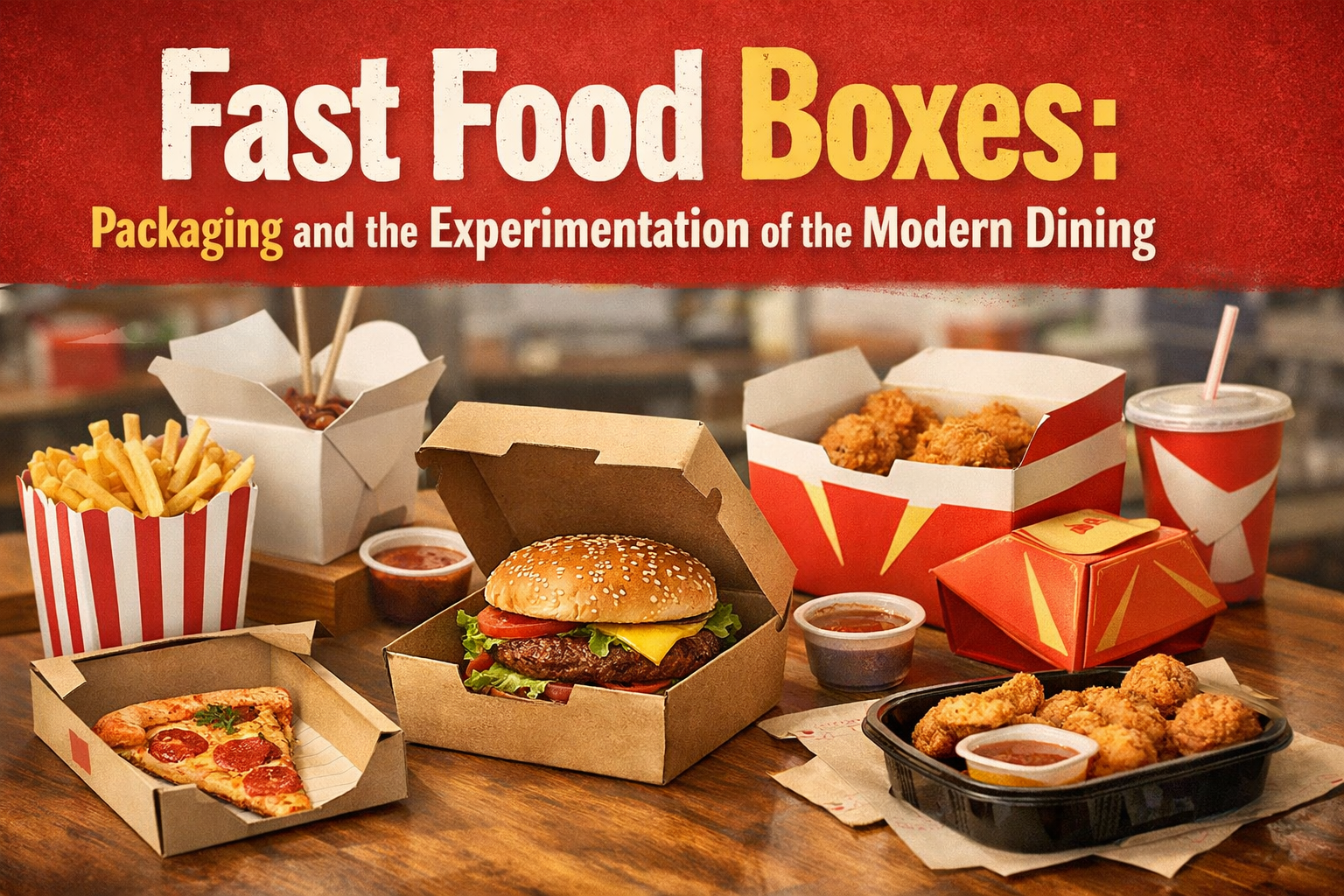
The fast-food sector in the world is growing at an astonishing rate, and efficiency, appearance and food safety overlap. The most basic and at the same time, very strategic component of this ecosystem is a fast food boxes. These packaging solutions cease to be containers; they have become very important in the communication of the brand, how customers experience the process, and how effectively they operate.
The History of Fast Food Packaging
In the past, the fast food packaging had one goal, which is convenience. Nonetheless, the packaging systems of fast foods in the contemporary world have become state of the art that harmonizes packaging durability, preservation and aesthetic value. With the increased consumer demands, brands have been forced to think over packaging as an identity not an appendage.
The modern day fast food boxes are designed in such a way that they retain their freshness, do not leak, and withstand the transportation stresses and at the same time hold the aesthetic integrity.
Food Safety: Functional Significance
The fast-food industry is not going to compromise on food safety. The design of fast food boxes is aimed at building some level of protection between food and external contaminants. The choice of material is vital in this case as it must be resistant to grease, moisture, and changes in temperature.
The major functional characteristics are:
- Heating to serve at the right temperature.
- Structural integrity to prevent spillages during transportation.
- Sogginess aversion ventilation features.
All these qualities help to improve the quality of food at the kitchen through to consumers.
Branding With Packaging Design
A competitive marketplace will mostly dictate that the packaging is the initial physical contact between a brand and its customers. Properly designed fast food boxes strengthen the brand recognition by providing consistent colour schemes, typography, and graphic designs. This visual continuity creates trust and increases the value of recall.Custom Packaging has turned out to be an effective tool of silent marketing that conveys quality, professionalism and attention to detail without coming into contact with the people.
Sustainability and Environmental Concerns
Packaging innovation has now been characterized by sustainability. Most companies are shifting to environmentally friendly fast food packaging that is recycled, biodegraded or compostable. This change, besides being in line with the regulation requirements, is also appealing to environmentally conscious customers.
Some of the sustainability-based practices are:
- Less material thickness and no reduction in strength.
- Water-based inks are used to print.
- Use of responsible sourced paperboard.
- These actions show the concern of a brand towards the environment.
Practical Design and Structural Engineering
On top of that, the design of fast food boxes, besides their appearance, is an outcome of careful engineering. The boxes should be able to store different food products, such as burgers and fries, as well as wraps and combo meals, and they should be portable.
Design considerations are usually centre on:
- Efficient storage is provided by stackability.
- High-volume operations can be easily assemble.
- Consumer ergonomics.
An organizationally designed box helps the faster workflow in the busy food service setting.
Role in Customer Experience
The quality of packaging greatly determines the perception of the customer. Aesthetically polished fast food wrappings that are operationally sound improve the level of dining experience. A durable, well packed box sends a message of care and professionalism, which have a subtle effect on customer satisfaction and loyalty to the brand.
The reliability of packaging is even more important in markets that depend on delivery, where the presentation of the food at the destination depends on it.
Individualization and Flexibility of the market
Personalization has turned into a competitive power of fast-food brands. The fast food boxes themselves may be customiz in terms of size, shape and print design to a particular menu item or a promotional campaign. The limited-edition designs, seasonal packaging, and regional-specific imagery can enable brands to remain topical and interesting.
Cost management and portion control are also provide through customization as specific packaging sizes of individual products are ensured.
Industry Standards and regulatory Compliance
Packaging of fast food should conform to strict food safety and food labelling laws. Good quality fast food packing is done with food grade materials that fit the hygienic standards in various locations. Labelling effectively makes the labels clear and gives the consumer the required information on the ingredients or allergens, or sustainability assertions.
Compliance does not only shield the consumers but also guard the brands against legal and reputational risks.
Trends in Future of Fast Food Boxes
The future of fast food packaging is still determin by innovation. The new trends are smart packaging including QR code, advancement of insulation technology, and minimalistic designs resulting in less waste. Fast food boxes will also keep onchanging as the consumer behaviour changes towards convenience and sustainability.
Even future-orient brands are already spending on the packaging blogs that will be encompassed by technological integration and ecology.
Final Perspective
The fast food boxes are an important interplay of design, functionality and branding in the food service sector. It is much more than mere containment, as it affects the quality of foods, the efficiency of operations and perception of the customers. With the fast food boxes becoming increasingly strategic as a business strategy, the issue of sustainability and innovativeness acquires an ever-increasing significance.
With the ability to focus on creative approaches to packaging, fast-food companies will be able to improve their performance in the workplace and their relationship with clients in a rapidly competitive market.