
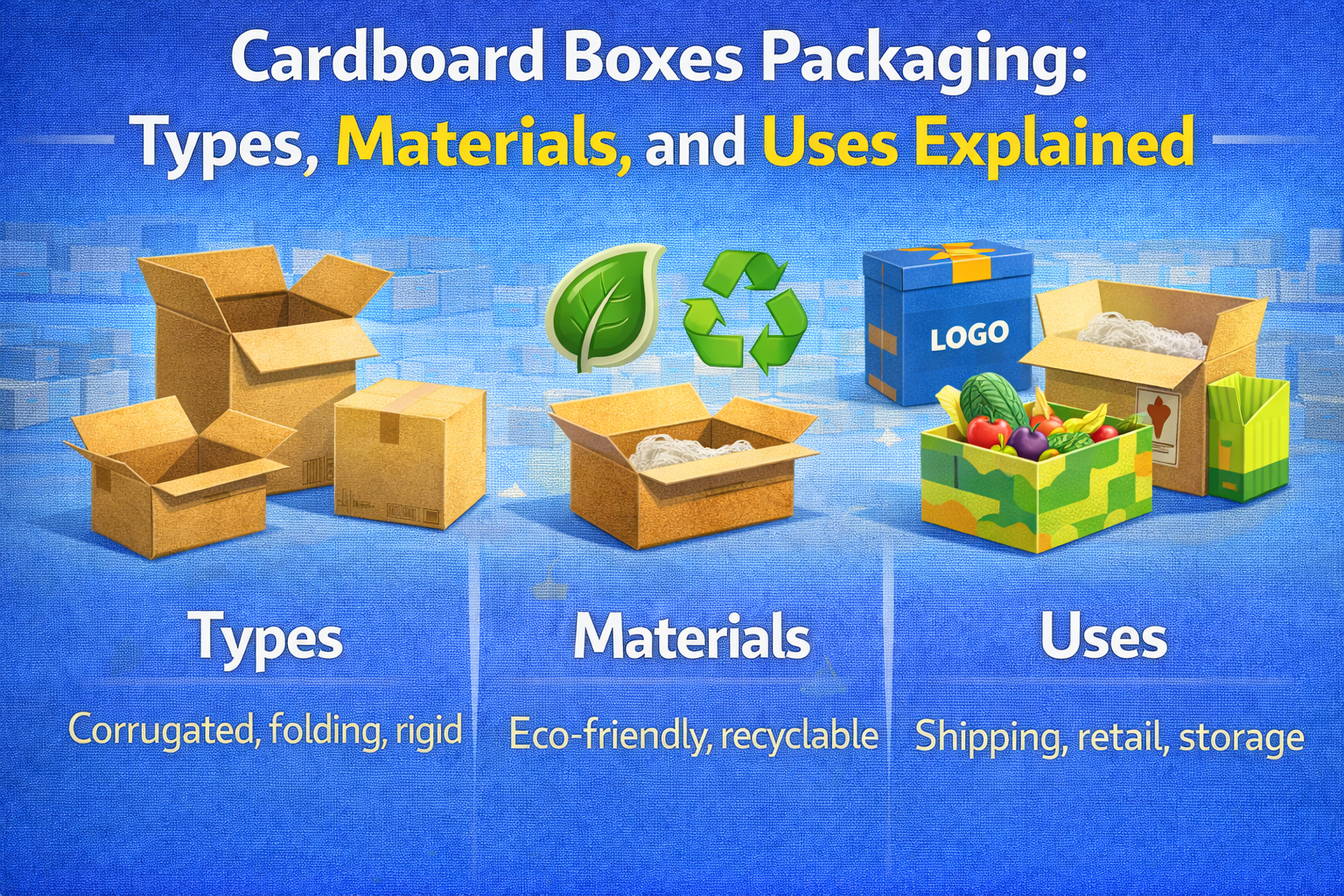
Cardboard boxes packaging plays a central role in modern shipping, storage, and retail presentation. Businesses across industries depend on cardboard packaging to protect products, improve logistics, and strengthen brand identity. Moreover, consumers use cardboard boxes packaging daily for organizing, moving, and recycling. Because of their durability and flexibility, cardboard boxes continue to dominate the global packaging industry.
In this guide, you will learn what cardboard boxes are, which materials manufacturers use, and how industries apply cardboard packaging solutions. Additionally, you will explore different types of cardboard boxes packaging and discover how to choose the right option for your products.
What Are Cardboard Boxes?
Cardboard boxes refer to containers made from paper-based materials that manufacturers shape into protective structures. These boxes secure products during storage and transportation while also supporting branding and presentation.
Furthermore, manufacturers produce cardboard boxes packaging in various sizes, thicknesses, and styles. As a result, these boxes meet the needs of both lightweight retail items and heavy industrial goods.
Most importantly, cardboard boxes packaging supports sustainability. Since manufacturers rely on renewable resources and recyclable materials, businesses can reduce environmental impact while meeting consumer expectations.
Importance of Cardboard Boxes in Packaging Industry
Cardboard boxes provides essential benefits for businesses.
First, these boxes protect products from damage during shipping. Second, cardboard packaging reduces transportation costs because it remains lightweight. Third, cardboard boxes packaging allows easy customization with logos, colors, and product details. Consequently, packaging becomes a powerful marketing tool.
In addition, cardboard packaging supports eco-friendly practices. Recycling facilities widely accept cardboard boxes, which encourages responsible waste management.
Materials Used in Cardboard Boxes
Manufacturers choose different materials based on strength, cost, and application.
Corrugated Cardboard
Corrugated cardboard consists of linerboards with a fluted middle layer. This structure increases strength and cushioning. Therefore, corrugated cardboard boxes packaging works well for shipping and heavy products.
Paperboard
Paperboard features a single thick layer of compressed paper fibers. Manufacturers use this material for folding cartons, cosmetic boxes, and food packaging.
Kraft Paper
Kraft paper offers high tear resistance and durability. Many shipping and retail cardboard boxes packaging designs use kraft material.
Recycled Cardboard
Recycled cardboard uses post-consumer waste. This option reduces environmental impact while maintaining reliable performance.
Types of Cardboard Boxes
Different box styles serve different purposes.
Regular Slotted Containers (RSC)
RSC boxes include equal-length flaps that meet in the center. Businesses widely use them for shipping and storage.
Full Overlap Containers (FOL)
FOL boxes feature overlapping flaps that add strength. These boxes support heavy or fragile items.
Die-Cut Cardboard Boxes
Die-cut cardboard boxes packaging offers custom shapes, windows, and handles. Retail brands often use this style.
Folding Cartons
Folding cartons ship flat and assemble easily. Food and cosmetic brands frequently choose this option.
Telescope Boxes
Telescope boxes consist of a top and bottom piece. This design allows height adjustment.
Flute Types in Corrugated Cardboard Packaging
Flute size affects strength and cushioning.
- A-Flute: Maximum protection
- B-Flute: Good puncture resistance
- C-Flute: Balanced strength
- E-Flute: Thin and printable
- F-Flute: Premium appearance
Manufacturers select flute types based on product weight and fragility.
Applications of Cardboard Boxes
Cardboard boxes packaging blogs supports many industries.
Shipping and Logistics
E-commerce companies rely on cardboard packaging for safe delivery.
Food and Beverage
Food-grade cardboard boxes packaging protects freshness.
Retail Packaging
Custom printed cardboard boxes enhance shelf appeal.
Electronics Packaging
Strong cardboard packaging prevents damage.
Pharmaceutical Packaging
Paperboard cartons display dosage and safety information.
Storage and Moving
Households use cardboard boxes for organizing and relocation.
Benefits of Cardboard Boxes
- Cost-effective
- Lightweight yet strong
- Eco-friendly
- Customizable
- Easy to store
These advantages make cardboard packaging a preferred solution.
How to Choose the Right Cardboard Boxes
First, evaluate product weight and fragility.
Second, choose proper size and thickness.
Third, consider branding needs.
Finally, prioritize sustainable materials.
Conclusion
Cardboard boxes packaging delivers protection, affordability, and sustainability. Businesses across industries depend on cardboard packaging to meet modern demands. By understanding materials, types, and applications, you can select the best cardboard boxes solution for your products and achieve long-term success.